The Expectations vs. The Realities of Rural Nursing

I’ve been working as a new grad nurse in a rural/remote hospital for three months now. While I’m finding my feet as a new nurse, I’m discovering that my expectations and the reality of living and working as nurse in rural Australia haven’t quite aligned. This week, in an attempt to get back into blogging, I’m reflecting on the experiences I’ve had so far.

View post to subscribe to site newsletter.

In all honesty, I came out here with the idea that I would conquer my chosen profession of nursing and gain valuable experience to help me conquer the world – saving lives, improving the state in which people live. It’s my dream to one day work for something like MSF or the Red Cross. Quite the fantasy. This is one area in which rural nursing has met my expectations. It seems to be the kind of place where many people come to ‘up-skill’. The need for nurses out here lends opportunity to those willing to venture out.

What I didn’t expect was the amount of aged-care work we would doing. Rural Australia has an ageing population (surprise, surprise – much like the rest of the western world), with younger people moving to cities and a low birth rate. Having already worked in aged care for two years now, I had thought I’d be leaving home for something a little more exciting.

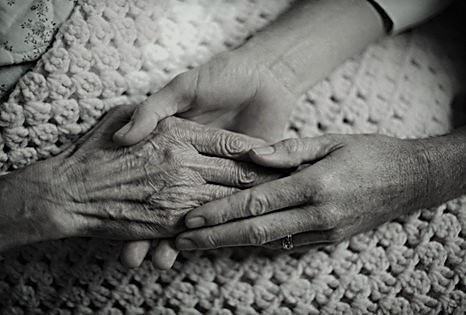
However, building (professional) relationships with my oldies has been one of the best parts of my job here. The positive in having aged-care here is that the residents can stay in their home town as they get older and it is actually quite a fast-paced working environment. From what I have seen so far, if there were only acute patients or emergency patients, my days might be more… dare I say it? The ‘Q’ word. We have been able to help with BBQs and Easter morning teas, as well as social events for the residents and their families and sundae treats organised by the lovely activities coordinator. One resident sometimes sings us songs as we help her to get ready for bed in the evenings.

There have also been instances where we needed something particular for a patient like a dressing or a specific medication which we haven’t had. I’d previously thought that these kinds of things would be readily available. Luckily are easily able to order anything we need, it’s just a matter of time to get it. The local pharmacy has also been an incredible asset to the town and the hospital.

In a larger metro hospital we could just call a doctor or any allied health and there they’d be but things are a little different here. It’s very lucky that we have a doctor here. There is one GP who services the whole town and is also the treating physician for any patients or residents of the hospital. He is basically permanently on-call and attends to any emergencies where the nurses might require more consistent and immediate assistance from a doctor. When he goes away on holiday or sick leave we use the Royal Flying Doctor Service (RFDS) which has been great!

During my second month here, there was a town-wide Telstra outage (one of the major telecom companies in Australia) for almost three days. Most people living in places like this use Telstra as it provides the best coverage in rural Australia, so when we ran out of phone coverage it was a big deal. It wasn’t just the mobiles either – it was the landlines too. Each of us as new grads were cut off from the outside world without any phone service. There was about half a day in the middle somewhere that the phones began to work again and then just like that *snapping fingers*, the phones were dead again. During the night shift, an emergency came in and one of the nurses had to go to his house to get him so that he could attend and provide medication orders.

Starting as a new nurse has been challenging. When I decided to become a nurse I knew that it wouldn’t be easy – it would be challenging in a way that starting any new job is but I didn’t expect to make so many mistakes so early on. They were nothing major but it definitely knocked my confidence a little. So something which I learnt quite early on, was to own it – mistakes are going to be made and it’s better if you can learn from it. I have done incident reports on myself to make sure that even though something has happened, I can provide safe care for my patients and myself.

While I’m not in the most remote of places, this experience so far has definitely left my expectations of rural nursing misaligned with the reality. I hope that being out here will help me to become a better nurse but more importantly, I hope that I don’t fail rural Australia and that rural Australia can survive the healthcare challenges it faces.

Next week in Part Two of The Expectations vs. The Realities, I write on what it’s like living in a rural town!
Subscribe for more posts!

Getting Tested for COVID-19 in Australia

Tucked away on the island of Australia we have remained fairly safe from COVID-19, though today I’ll be sharing my experiences of being tested for COVID-19 in Australia. NOTE: Do NOT attempt to swab yourself! Swabbing/testing for COVID-19 should only be done by a qualified healthcare professional.

View post to subscribe to site newsletter.

This week, I’ve had my wisdom teeth removed. I’ve been slightly out of it but I’m committed to the blog this year! So here is just a short post for this week.

For those of you who know me, a sore throat is a Daisy Specialty – a regular occurrence. I might be a hypochondriac. Since the beginning of this pandemic, I have been tested for COVID-19 four times. Currently, the testing criteria for a COVID-19 test in the ACT are: displaying any signs and/or symptoms of COVID-19. It may also be recommended by ACT Health that you get tested if you have been in close contact with a confirmed case of COVID-19 or have returned from any COVID-19 hot-spots in the last 14 days.

You can find information about whether you should get tested for COVID-19 and testing criteria in the ACT here: https://www.covid19.act.gov.au/stay-safe-and-healthy/symptoms-and-getting-tested . For information about testing criteria in other areas, please visit your local government health website or contact your GP.

For peace of mind and the safety of everyone, when I got a sore throat I went to get a COVID test (and also because that’s what we have been directed to do by our government). There are a few ways which you can get swabbed here: one is a clinic and another is a drive-through testing site. I attended a clinic as it was the one closest to my house each time I got a COVID swab.

When I first entered the clinic, I was directed to do my hand hygiene and apply a mask before approaching the reception desk. Once at the reception desk, the nurse confirmed with me why I was attending the clinic and which symptoms I had, as well as took my details down.

During the busiest times, the nurse asked me to wait in my car and would send me a text when it was my turn for a test, though usually I was just directed to a take a socially-distanced seat in the waiting room. The waiting time varied but I always took a book and some earphones with me. Highly recommend a good book for the wait!

The nurse would then call me for my swab! The nurses were always dressed in full PPE and there was a HUGE sign on the door to the waiting room that said ‘DO NOT ENTER THIS AREA WITHOUT APPROPRIATE PPE’ in giant red letters.

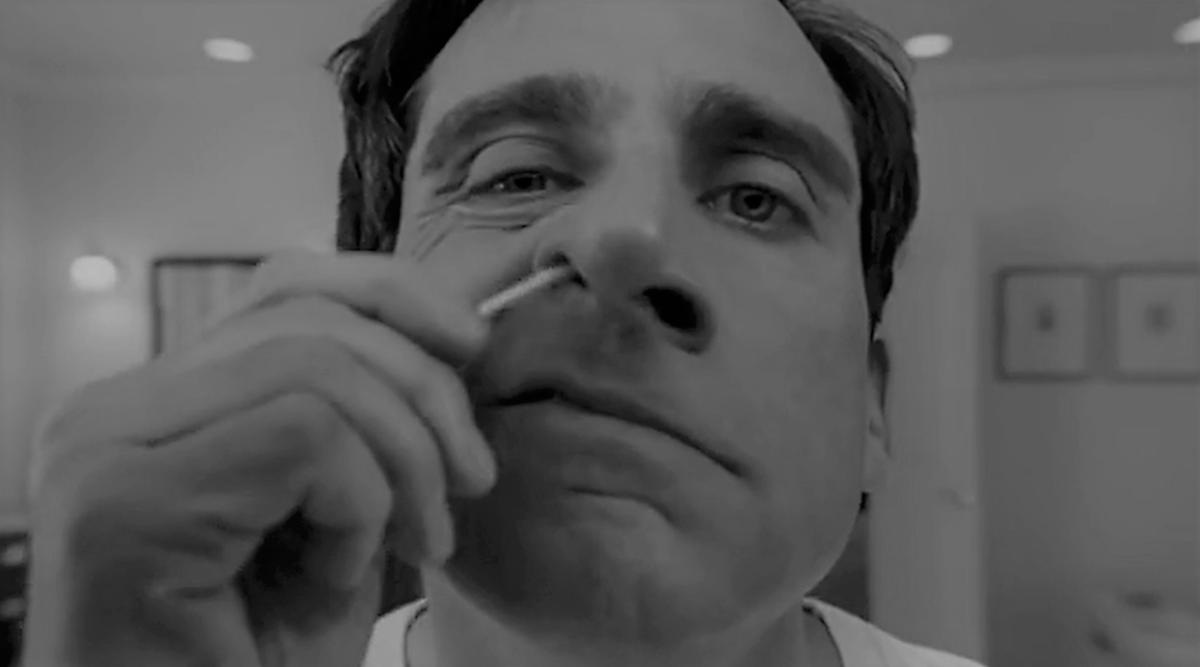
I was then asked to sit in a chair while two healthcare professionals (I’ve had a nurse and a doctor as well as two nurses before, so I think it varies) go through my information. They explained the procedure to me before asking me to remove my mask (into a bin) and lean my head back, against the wall. Then that lovey, long q-tip-looking thing called a swab goes down your throat but only for a few seconds. Then immediately after, the swab makes it’s way into what feels like your brain! Only kidding! The swab doesn’t go past your nasal cavity but it does feel slightly uncomfortable for a few seconds and it always makes my eyes water.

The lovely staff then asked me to do my hand hygiene, put a mask on and re-do my hand hygiene again. They gave me some information about self-isolating while I waited for my test results, as well a certificate of attendance (in place of a sick certificate). I then headed back to the car and received my test results via text in the next few days. If your test is positive for COVID-19, currently you would receive a phone call with your result.

I have heard about some varied methods and have been wondering about the efficacy of these different methods. For example, swabs only being taken from the nasal cavity, swabs being taken from one nostril v. two nostrils or whether the swab must be taken from the back of the nasal cavity v. just the nasal passage. I will have to do some reading on this.

I’d love to hear your thoughts and experiences if you’ve been tested for COVID-19 or if you’ve done some reading on which is the most effective form of swab in testing for COVID-19. Until next week, lovely people!

Subscribe for new posts!